



SERVICE 03

Laboratory reliability begins before the result: method, traceability and control.

Support for laboratories so that people, equipment, methods, records and quality criteria operate as a verifiable system consistent with the type of testing performed.

Laboratories and standardization
03Laboratories and standardization

OVERVIEW

A technical approach guided by context and outcomes.

The work does not begin with buying equipment. It begins by defining what the laboratory needs to measure, by which method, with which performance requirements and how each result will be traceable from sample receipt to report.

TechCiência can support diagnosis, workflow design, documentation, equipment management, training, method validation/verification and audit preparation, using ISO/IEC 17025 when it is appropriate to the scope.

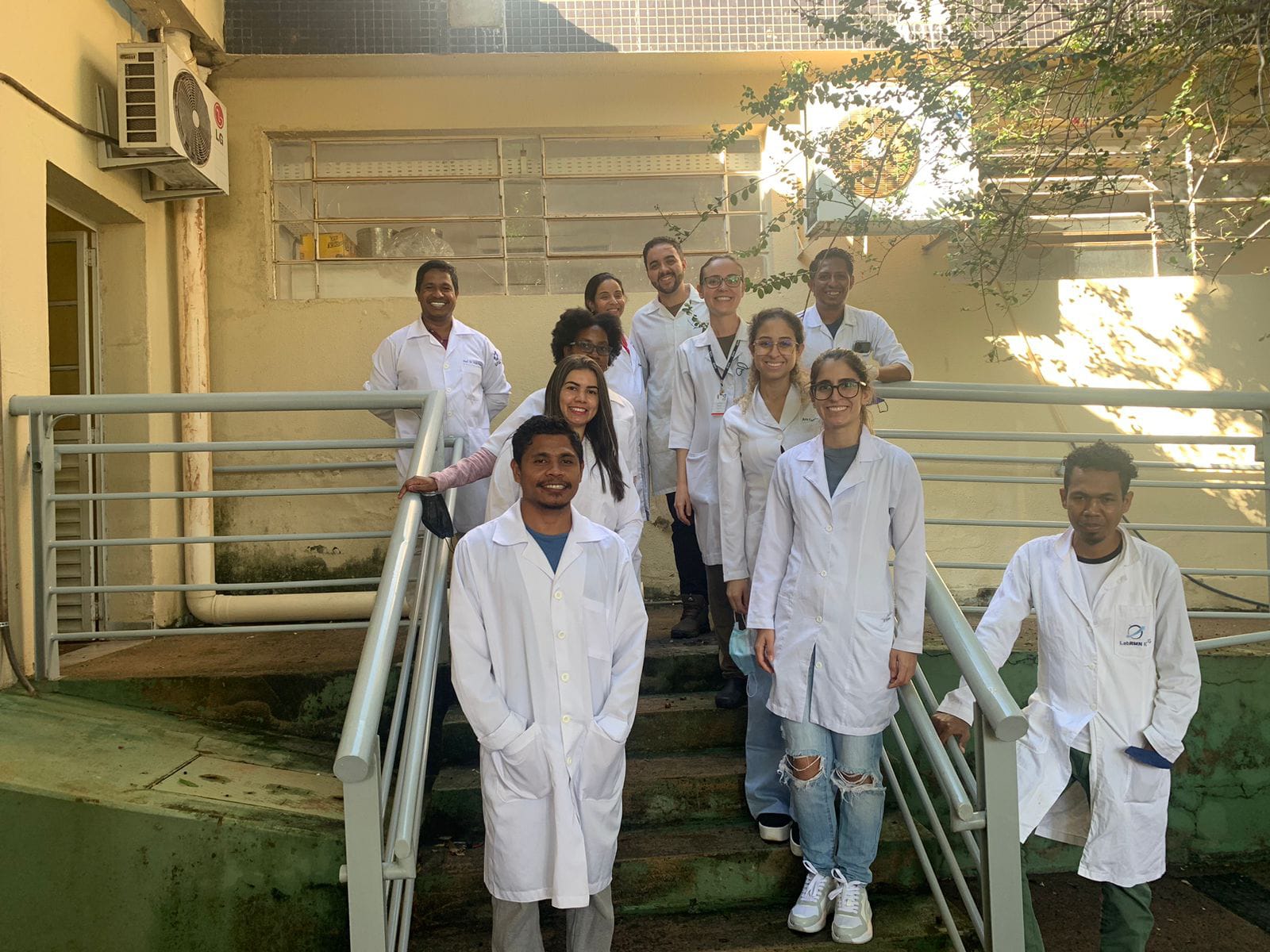
Julião Pereira with a laboratory team, related to methods, quality and standardization.

TECHNICAL AND SCIENTIFIC BASIS

Julião Pereira

Chemist · PhD in Chemistry · Researcher

This service is supported by practical laboratory work, research management, analytical instrumentation and quality systems. The CV records fuel-quality monitoring, method-development activities and training related to ISO/IEC 17025.

From the bench to reliable results

  • Auditor training and interpretation of NBR ISO/IEC 17025:2017, together with experience in uncertainty calculations, calibration certificates and metrological reliability.

  • Work in ANP’s Fuel Quality Monitoring Program in Goiás and Tocantins, including physicochemical testing of ethanol, gasoline, diesel and biofuels.

  • Experience with HRGC/GC-FID/GC-MS, HPLC, ICP-OES, LC-MS, FTIR, thermal analysis and capillary electrophoresis, as well as Fast-GC/Fast-HRGC method development and validation activities.


Related technical and scientific references

01

Scientific reference

Occurrence of diethyl phthalate (DEP) in food using different packaging: detection and traceability

Química Nova, vol. 47, no. 7, e-20240019, 2024. DOI: 10.21577/0100-4042.20240019

HS-GC-MS applied to detection and traceability of DEP in packaging and food — an example of method, analytical control and evidence interpretation.

Open publication
02

Scientific reference

Use of murici (Byrsonima crassifolia) and jabuticaba (Plinia cauliflora) residues in the preparation of porous materials: Effect of pH on the adsorption efficiency of the contaminants phenol, diethylphthalate and amoxicillin

Desalination and Water Treatment, vol. 317, 100110, 2024. DOI: 10.1016/j.dwt.2024.100110

An adsorption study connecting porous-material preparation, pH effects and contaminant-removal efficiency.

Open publication
03

Scientific reference

Removal of amoxicillin, phenol, and diethyl phthalate using activated carbon from murici seeds (Byrsonima crassifolia L. Kunth)

Desalination and Water Treatment, vol. 322, 101134, 2025. DOI: 10.1016/j.dwt.2025.101134

Activated carbon from murici seeds applied to amoxicillin, phenol and diethyl phthalate removal with analytical performance evaluation.

Open publication
04

Scientific reference

Headspace GC/MS for identification of bioactive compounds of Curcuma longa L. leaf extract: Industrial application as antioxidant for soybean oil

Ciência e Agrotecnologia, vol. 47, 2023. DOI: 10.1590/1413-7054202347013922

GC/MS used to identify bioactive compounds and connect instrumental characterization to a technological application.

Open publication

SERVICE SCOPE

What the project may include

The final scope is defined after understanding the challenge, objectives, available resources and implementation conditions.

01

Assessment of workflows, infrastructure, methods and responsibilities

02

Documentation and controls aligned with ISO/IEC 17025 when applicable

03

Method validation/verification, records and traceability

04

Planning for equipment, calibration, uncertainty and internal audits

WHO IT IS FOR

Designed for institutions and people who need to turn knowledge into practical capacity.

  • 01Laboratories being implemented or reorganized
  • 02Universities and research centers standardizing routines
  • 03Food, chemistry, environmental, fuel and quality-control laboratories
  • 04Institutions preparing documentation, staff and evidence for audits

DELIVERABLES

Documented outputs that support implementation, continuity and evaluation.

Deliverables are defined according to project needs and may combine documents, guidance, systems, training and follow-up.

01

Technical diagnosis with gaps, risks and priorities

02

Process map, responsibilities and control points

03

Structure for SOPs, records, equipment and traceability

04

Implementation, training, internal-audit and follow-up plan

HOW WE WORK

A clear process from assessment to knowledge transfer.

01

Analytical scope

Definition of tests, matrices, performance requirements, workload and laboratory objectives.

02

Reliability diagnosis

Assessment of sample flow, methods, equipment, calibration, records, people and critical points.

03

System structuring

Organization of SOPs, responsibilities, controls, acceptance criteria, traceability and records.

04

Practical verification

Training, internal audit, gap treatment and follow-up of early implementation routines.

BENEFITS

What the project is designed to strengthen

Results that are more traceable and technically defensible

Less dependence on undocumented team knowledge

Clearer control of calibration, methods, records and responsibilities

A more structured path to audits and continuous improvement

FREQUENTLY ASKED QUESTIONS

Important information about this service

Is the service only for laboratories seeking accreditation?

No. ISO/IEC 17025 can be used as a reference for organization and reliability even when accreditation is not an immediate objective.

Can the scope focus only on methods and equipment?

Yes. The work can be limited to equipment selection, methods, calibration, uncertainty, records or validation/verification.

Does TechCiência issue accreditation?

No. TechCiência can support preparation, documentation, training and internal audits. Accreditation is granted by the competent body after its own assessment.

TALK TO TECHCIÊNCIA

How can this service support your project?

Share the context, objectives and main constraints so we can begin a technical assessment.

Present your project