

SERVICE 04

From raw material to analytical evidence: technical decisions for food, water and production chains.

Projects connecting product characterization, analytical methods, quality, water, environment and residue utilization to answer concrete production and control questions.

Food, environment and agroindustry
04Food, environment and agroindustry

OVERVIEW

A technical approach guided by context and outcomes.

Food and agroindustrial processes combine variables that cannot be assessed in isolation: raw material, processing, packaging, stability, contaminants, water, analytical method and production context all influence final quality.

TechCiência can support technical-question definition, study design, analysis interpretation, quality control and development-project organization. The goal is to produce information that supports decisions without replacing regulatory testing or the responsibilities of competent authorities.

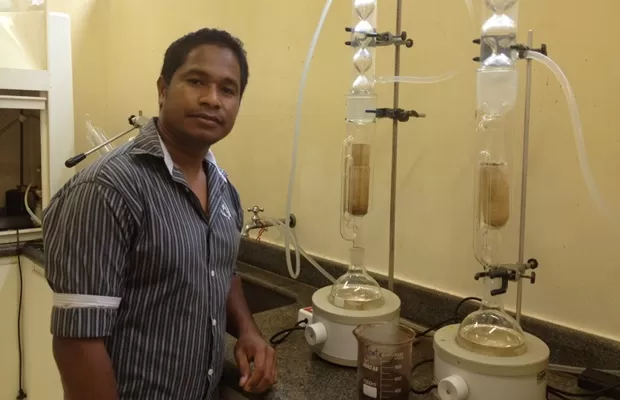
Julião Pereira in a laboratory during research activity.

TECHNICAL AND SCIENTIFIC BASIS

Julião Pereira

Chemist · PhD in Chemistry · Researcher

Julião’s work combines Food Science and Technology, Analytical Chemistry, regional products, water, residues and contaminants — a background directly related to projects linking product, process and laboratory evidence.

Applied research in food, water and residue utilization

  • Participation in research on cocoa honey, tua-sabu, Curcuma longa, food packaging and analytically relevant contaminants.

  • Experience with GC-MS, HPLC and other techniques used for characterization, compound identification and contaminant traceability.

  • Research exploring residues and regional raw materials as sources of bioactive compounds or materials for contaminant removal.

Research directly related to this service

01

Scientific reference

Food-related properties and composition of cocoa honey (Theobroma cacao L.): An integrated investigation

Food Research International, vol. 202, 115694, 2025. DOI: 10.1016/j.foodres.2025.115694

Integrated characterization of cocoa honey and discussion of its properties and potential food applications.

Open publication
02

Scientific reference

Occurrence of diethyl phthalate (DEP) in food using different packaging: detection and traceability

Química Nova, vol. 47, no. 7, e-20240019, 2024. DOI: 10.21577/0100-4042.20240019

Detection and traceability of diethyl phthalate in different packaging and food matrices using HS-GC-MS.

Open publication
03

Scientific reference

Headspace GC/MS for identification of bioactive compounds of Curcuma longa L. leaf extract: Industrial application as antioxidant for soybean oil

Ciência e Agrotecnologia, vol. 47, 2023. DOI: 10.1590/1413-7054202347013922

Characterization of Curcuma longa bioactive compounds and application as an antioxidant in soybean oil.

Open publication
04

Scientific reference

Use of murici (Byrsonima crassifolia) and jabuticaba (Plinia cauliflora) residues in the preparation of porous materials: Effect of pH on the adsorption efficiency of the contaminants phenol, diethylphthalate and amoxicillin

Desalination and Water Treatment, vol. 317, 100110, 2024. DOI: 10.1016/j.dwt.2024.100110

Use of murici and jabuticaba residues to prepare porous materials for contaminant adsorption.

Open publication
05

Scientific reference

Removal of amoxicillin, phenol, and diethyl phthalate using activated carbon from murici seeds (Byrsonima crassifolia L. Kunth)

Desalination and Water Treatment, vol. 322, 101134, 2025. DOI: 10.1016/j.dwt.2025.101134

Activated carbon from murici seeds applied to removal of amoxicillin, phenol and diethyl phthalate.

Open publication
06

Scientific reference

Ethyl alcohol content of tua-sabu (brandy) from Timor-Leste: derived from the sap of the tua-tali palm (Corypha utan Lam.)

Scientia Plena, vol. 21, no. 4, 041502, 2025. DOI: 10.14808/sci.plena.2025.041502

Characterization of alcohol content in Timor-Leste tua-sabu and discussion of production-chain factors affecting quality.

Open publication
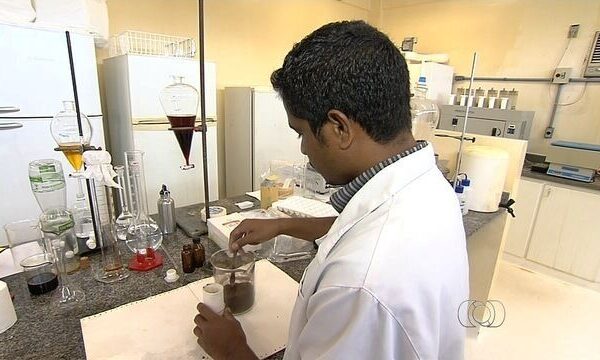
Julião during research activity related to the development of materials for water treatment.

APPLIED RESEARCH

From coffee grounds to water purification

Research developed at UFG investigated the use of coffee grounds to produce sorbent materials for removing contaminants from water, connecting analytical chemistry, waste reuse and a technological application aimed at the reality of Timor-Leste.

View report on G1

SERVICE SCOPE

What the project may include

The final scope is defined after understanding the challenge, objectives, available resources and implementation conditions.

01

Physicochemical characterization and interpretation of food and beverage data

02

Studies of contaminants, packaging, water and adsorbent materials

03

Use of by-products and residues in new applications

04

Technical support for quality control and agroindustrial process organization

WHO IT IS FOR

Designed for institutions and people who need to turn knowledge into practical capacity.

  • 01Agroindustries, producers, cooperatives and food companies
  • 02Universities, laboratories and territorial-development projects
  • 03Institutions working with water, residues, contaminants and applied sustainability
  • 04Projects involving regional products and production chains in Brazil or Timor-Leste

DELIVERABLES

Documented outputs that support implementation, continuity and evaluation.

Deliverables are defined according to project needs and may combine documents, guidance, systems, training and follow-up.

01

Technical investigation or improvement plan

02

Definition of parameters, methods and indicators to be monitored

03

Structured interpretation of available laboratory results

04

Documented technical recommendations for process, quality or new research stages

HOW WE WORK

A clear process from assessment to knowledge transfer.

01

Problem and production chain

Mapping of raw material, product, process, territory, risks and the decision the study must support.

02

Analytical plan

Definition of parameters, samples, methods, references and criteria required to answer the question.

03

Result interpretation

Integration of physicochemical, instrumental and process data with limitations and uncertainties made explicit.

04

Technical application

Organization of recommendations, controls, validation needs and future development stages.

BENEFITS

What the project is designed to strengthen

Decisions supported by measurable parameters and evidence

Integrated view of product, process, environment and quality control

Better organization of hypotheses, tests and next steps

Residue and raw-material use assessed through technical criteria

FREQUENTLY ASKED QUESTIONS

Important information about this service

Can the service focus on a specific regional product?

Yes. The project may start from a specific raw material or product and define which questions, analyses and references are required.

Does TechCiência perform every analysis in-house?

Not necessarily. Depending on the method and infrastructure required, the project may involve partner laboratories or data produced by qualified institutions.

Can the service work with residues and by-products?

Yes. The scope may assess characterization, utilization potential, treatment needs and hypotheses for new applications.

TALK TO TECHCIÊNCIA

How can this service support your project?

Share the context, objectives and main constraints so we can begin a technical assessment.

Present your project